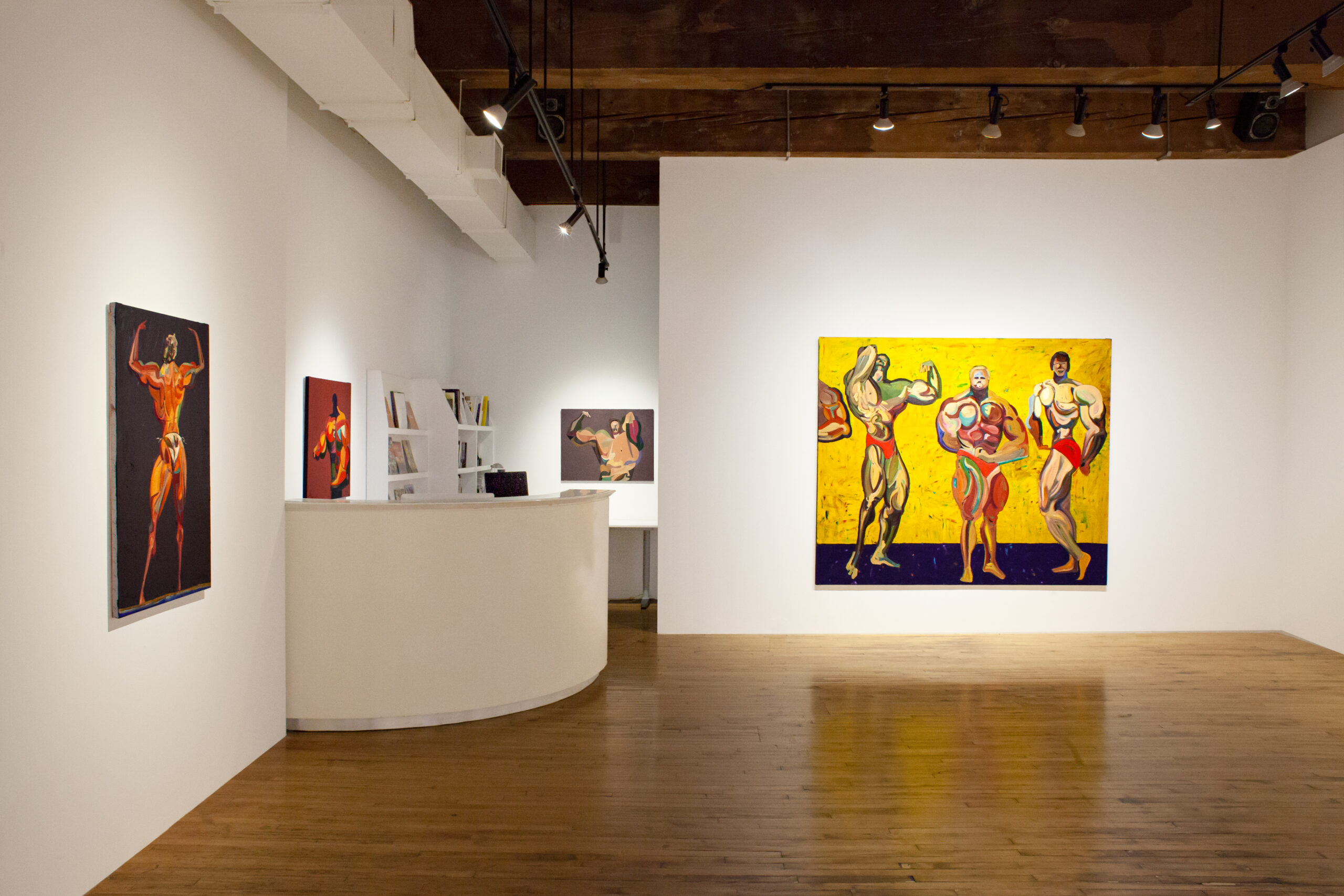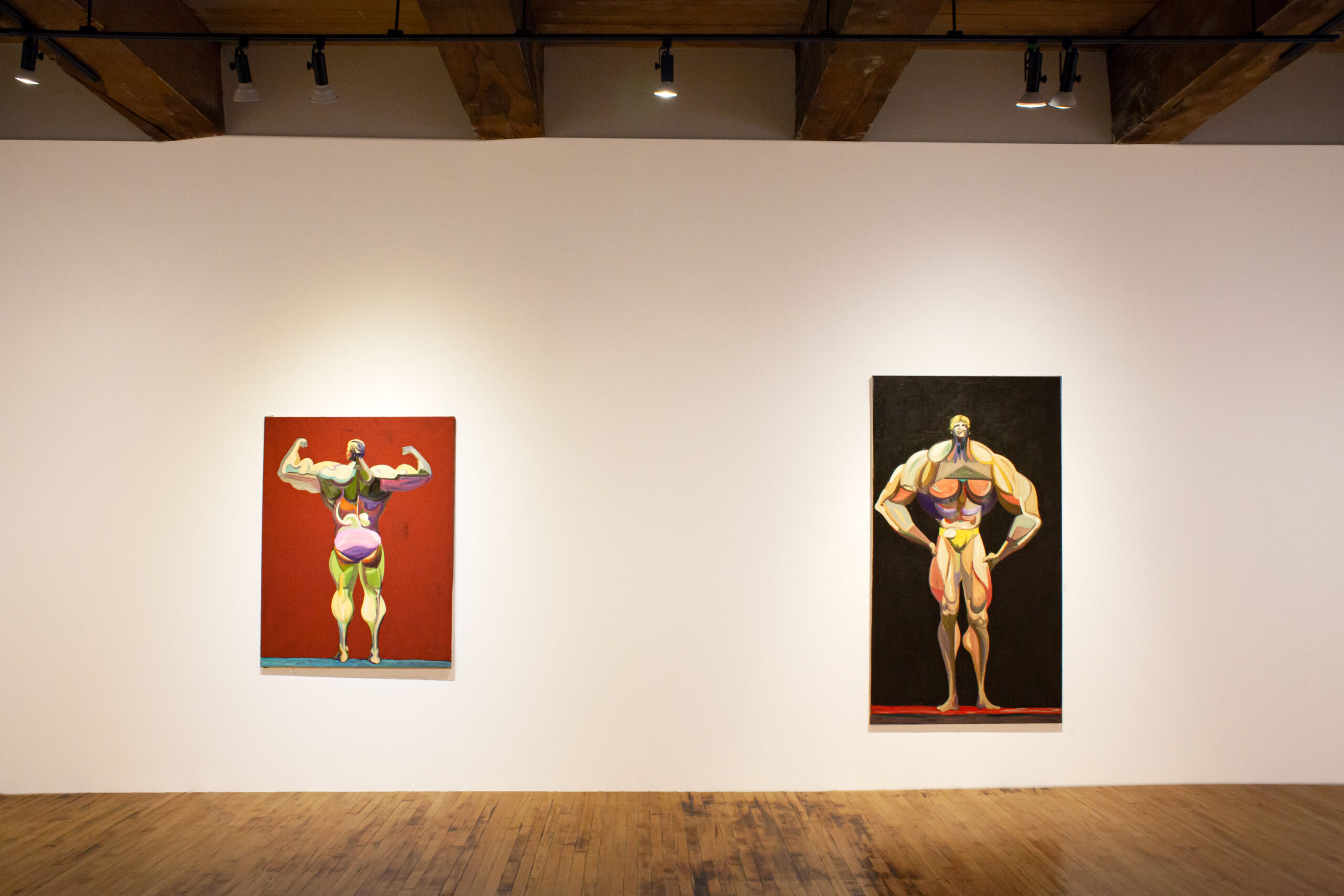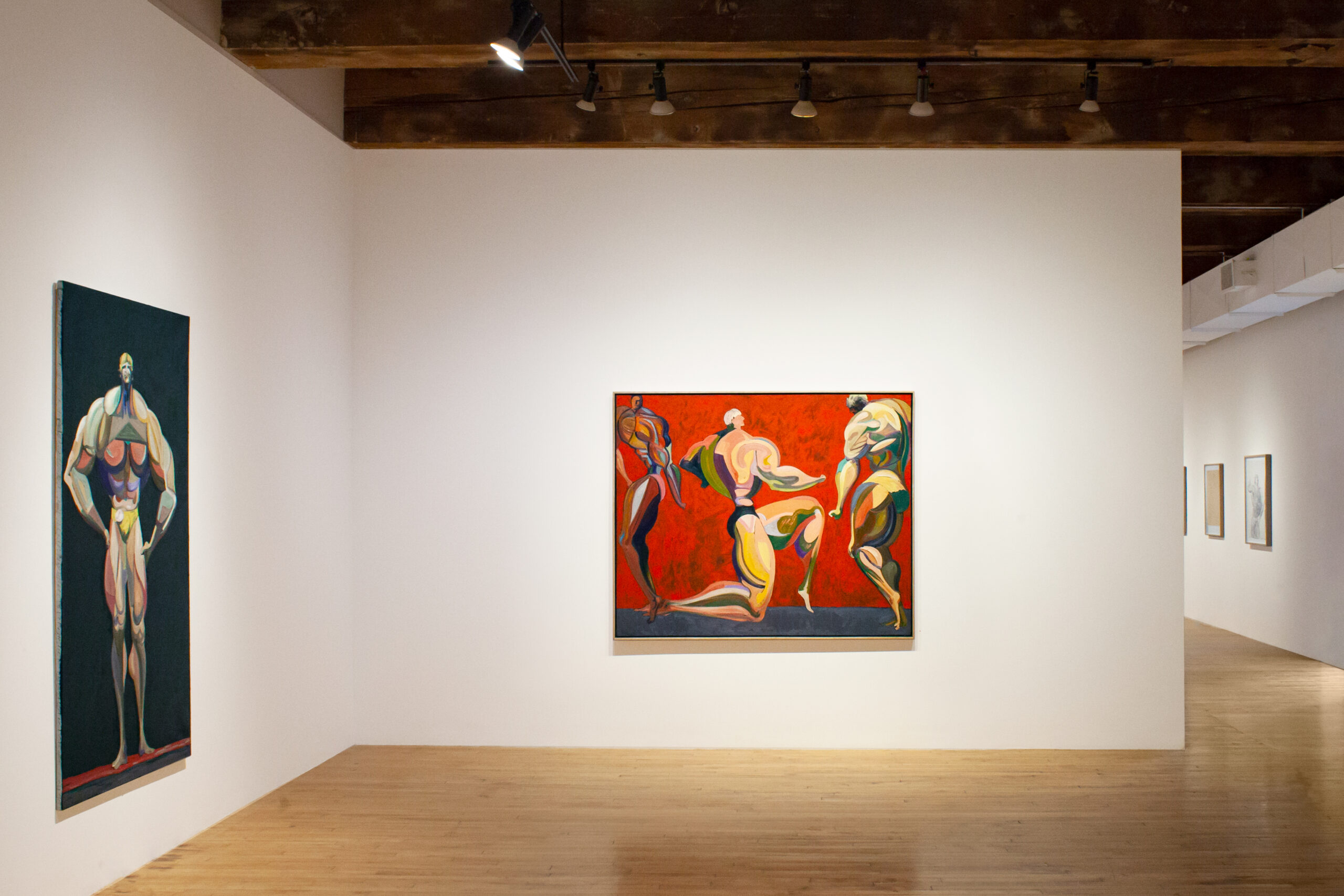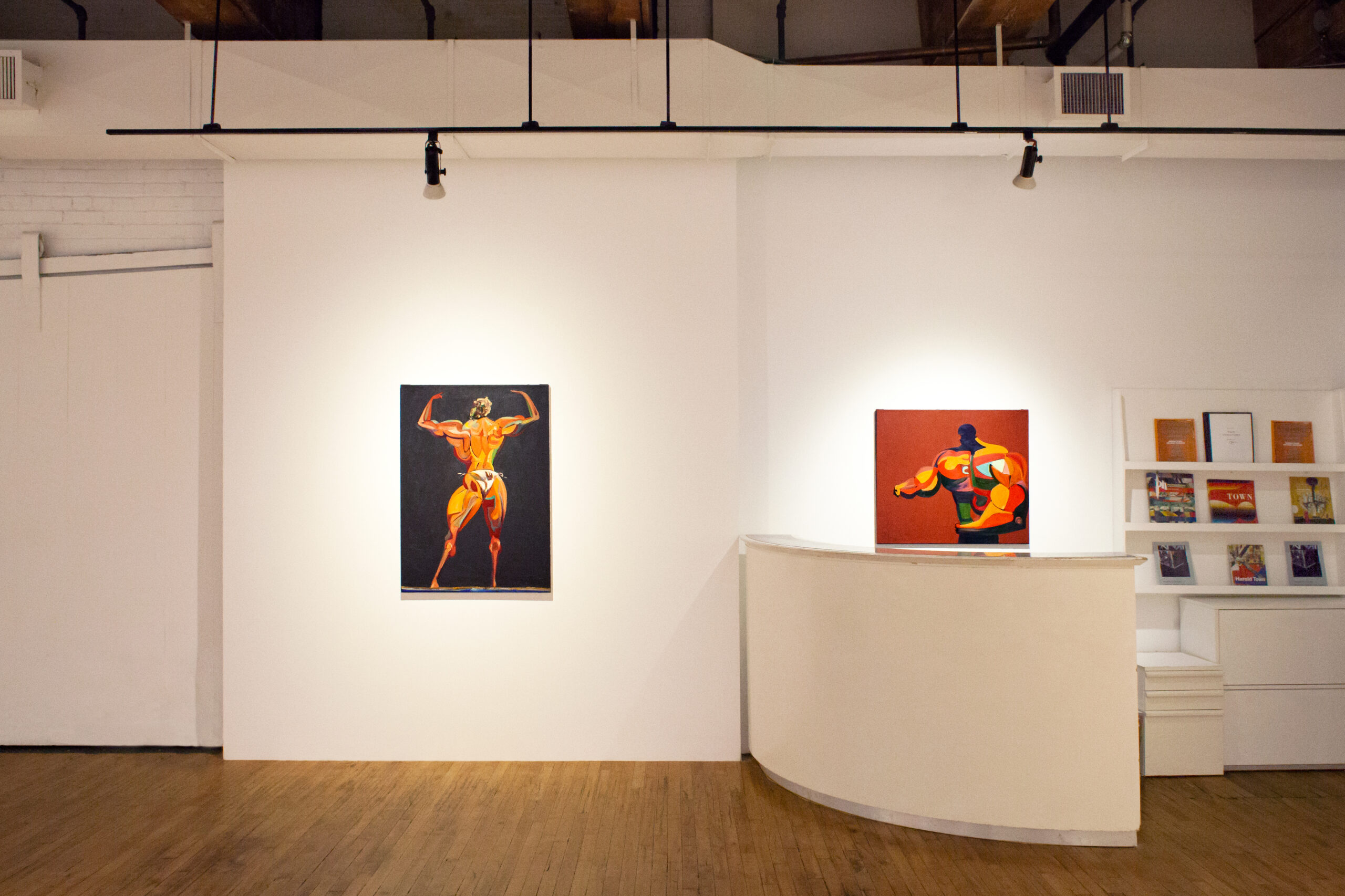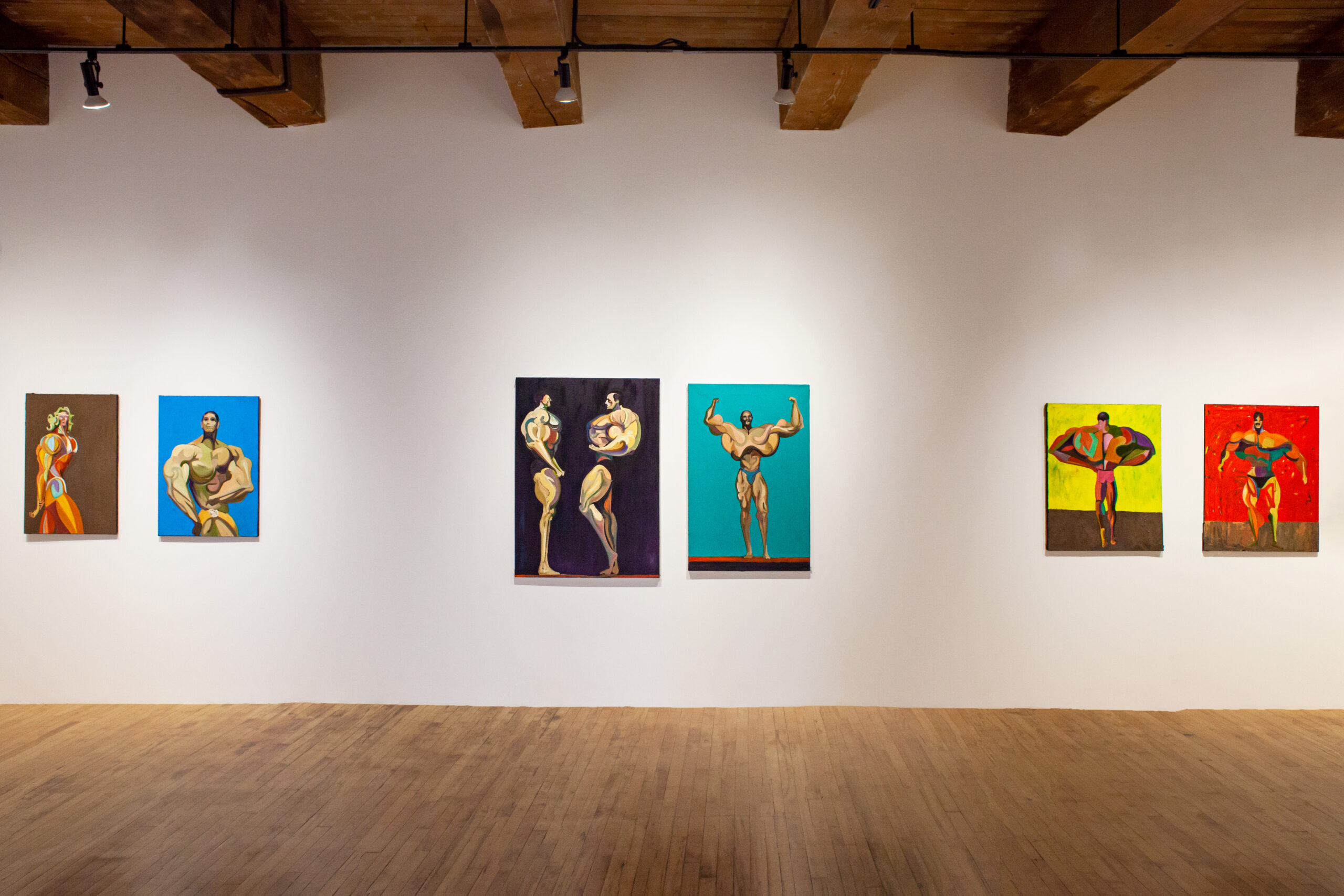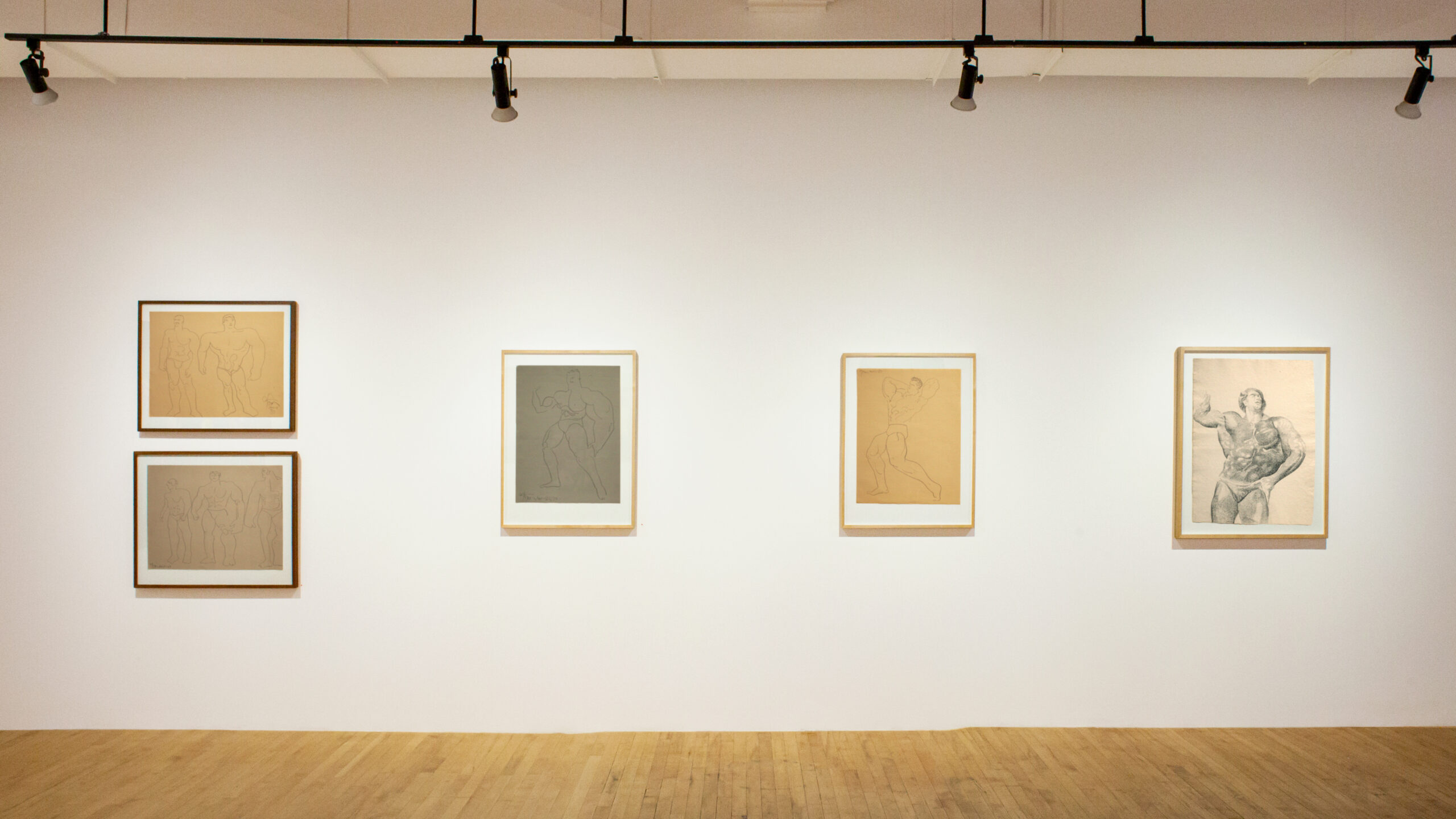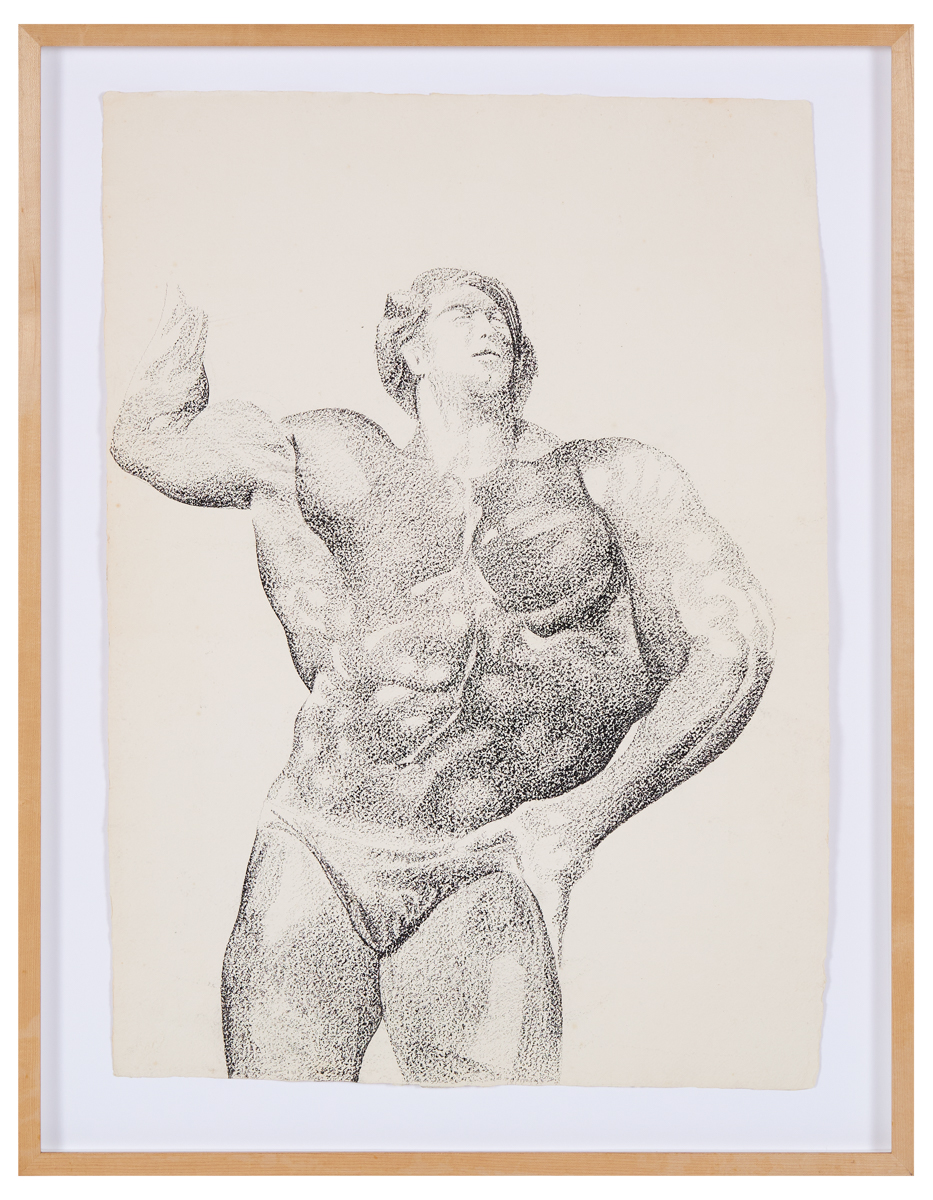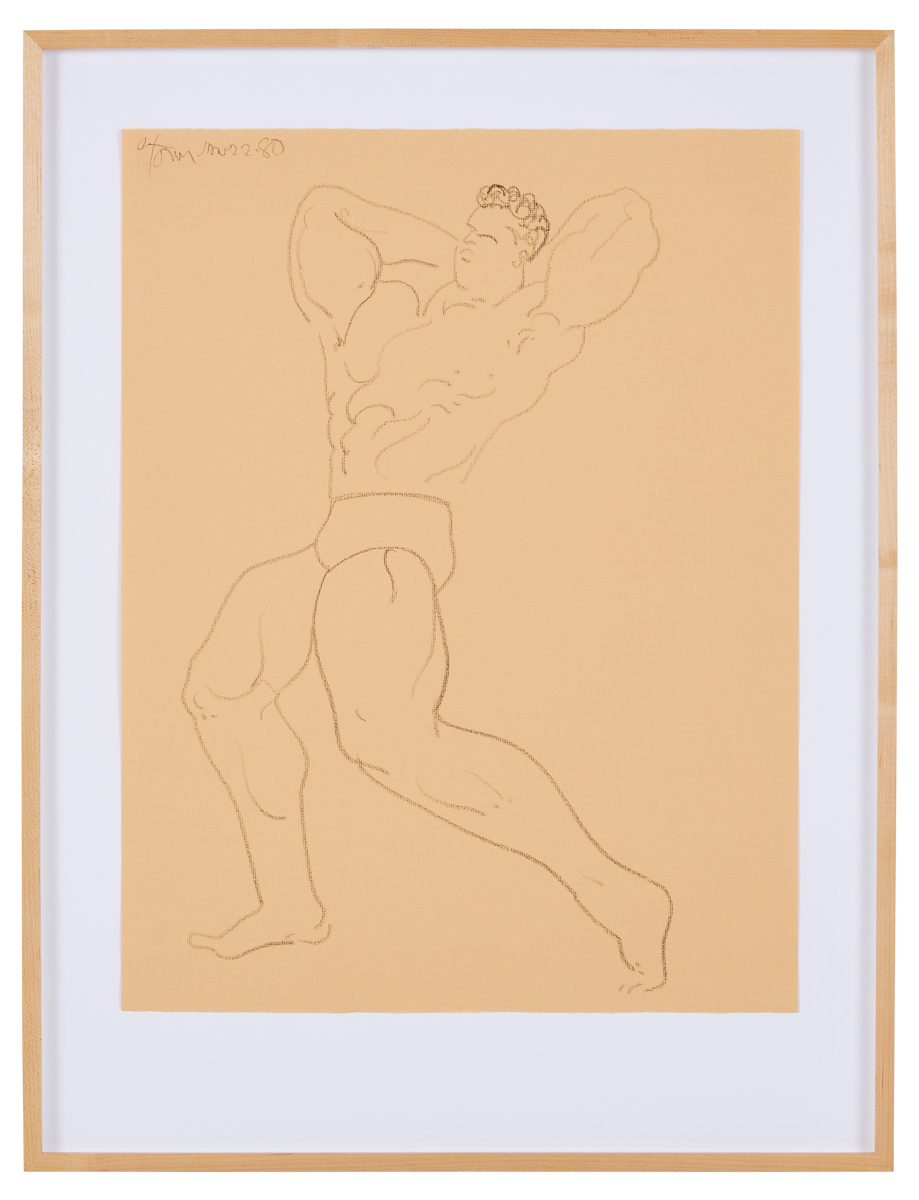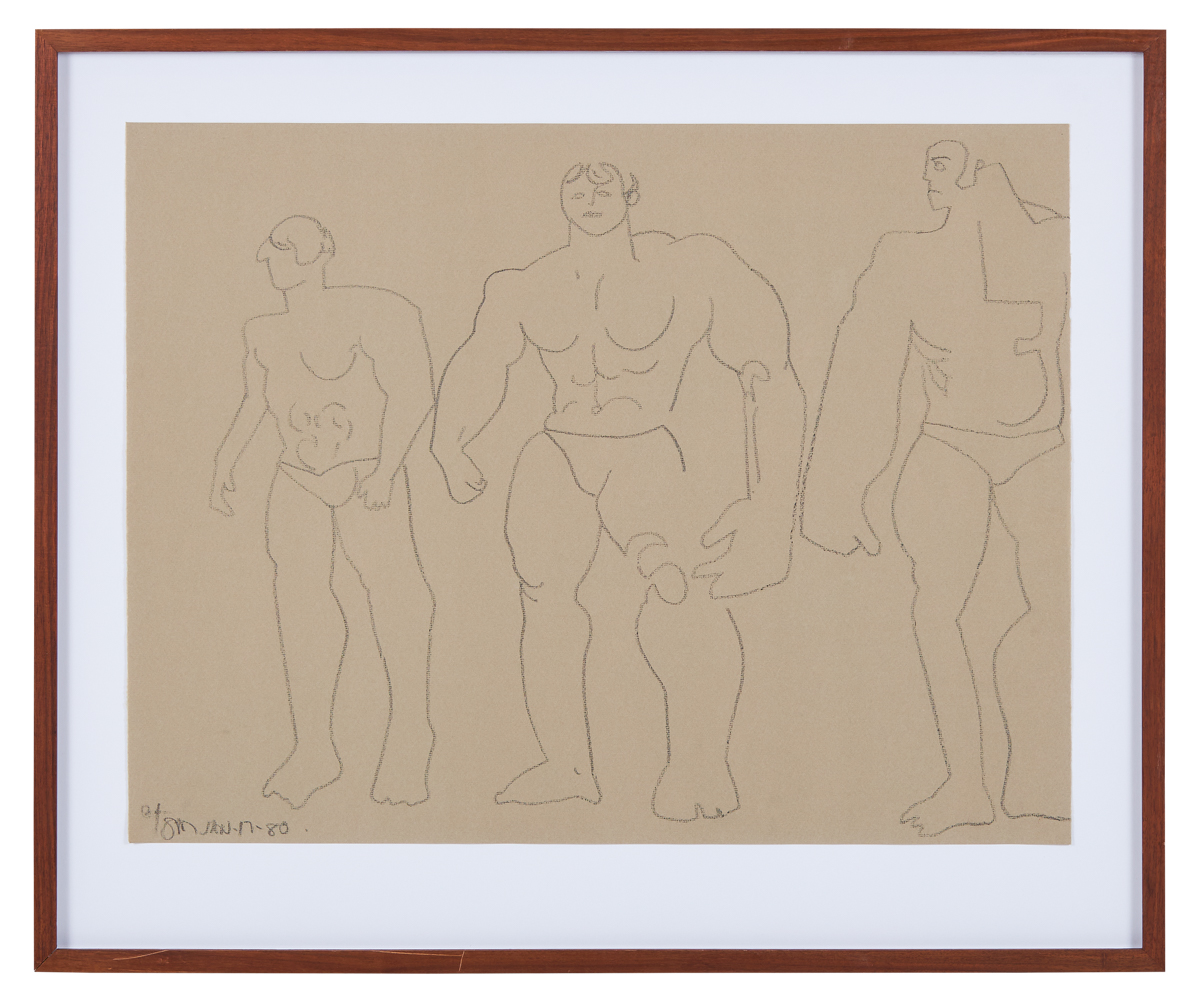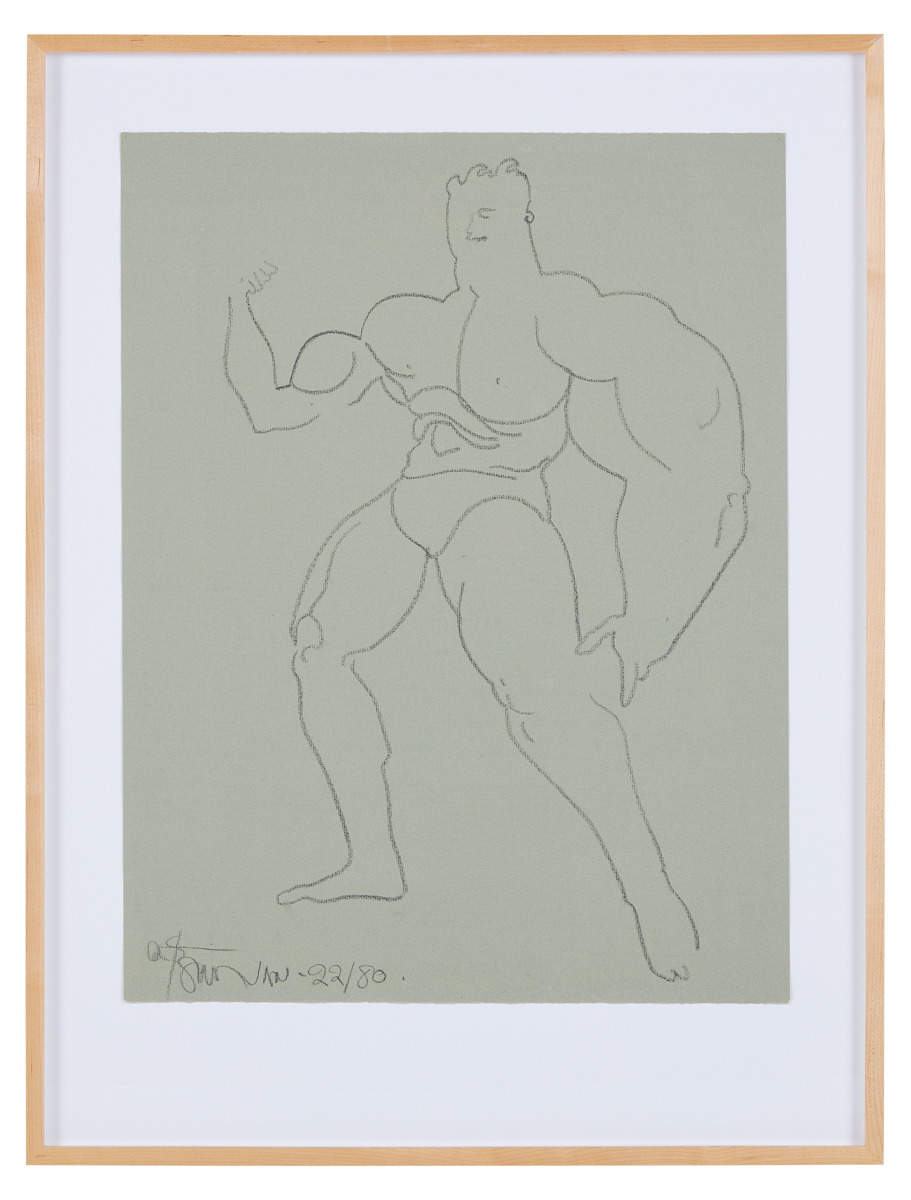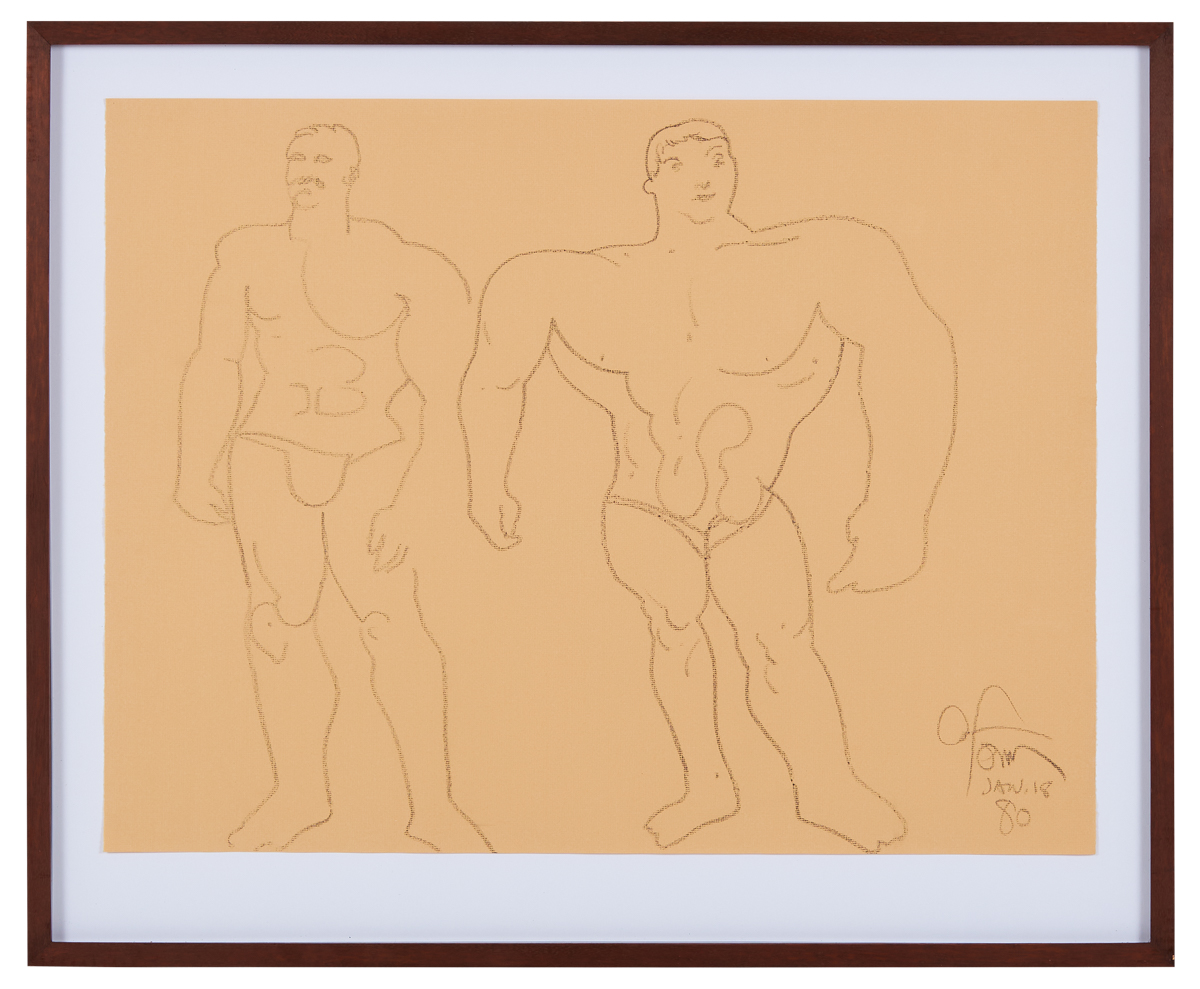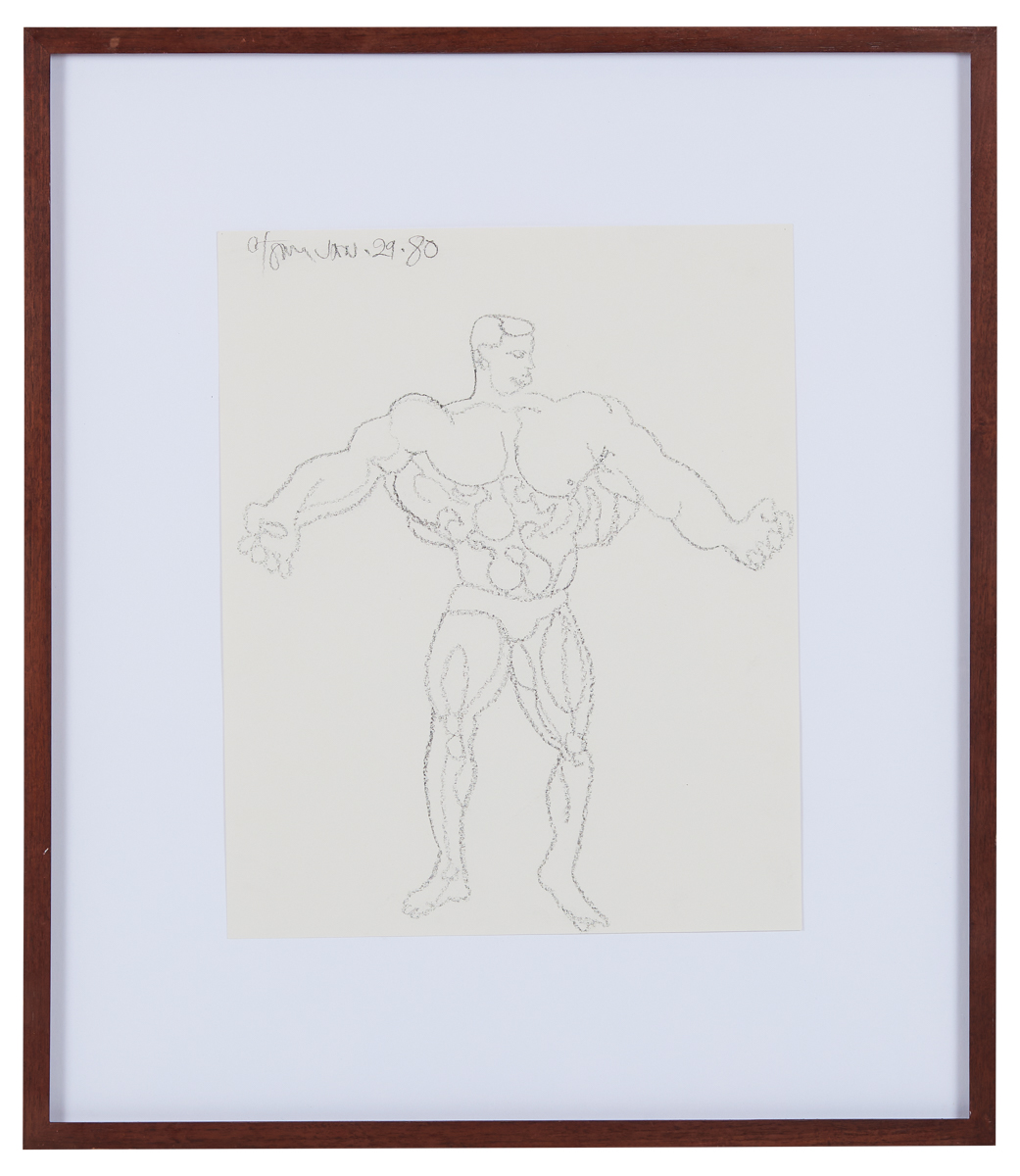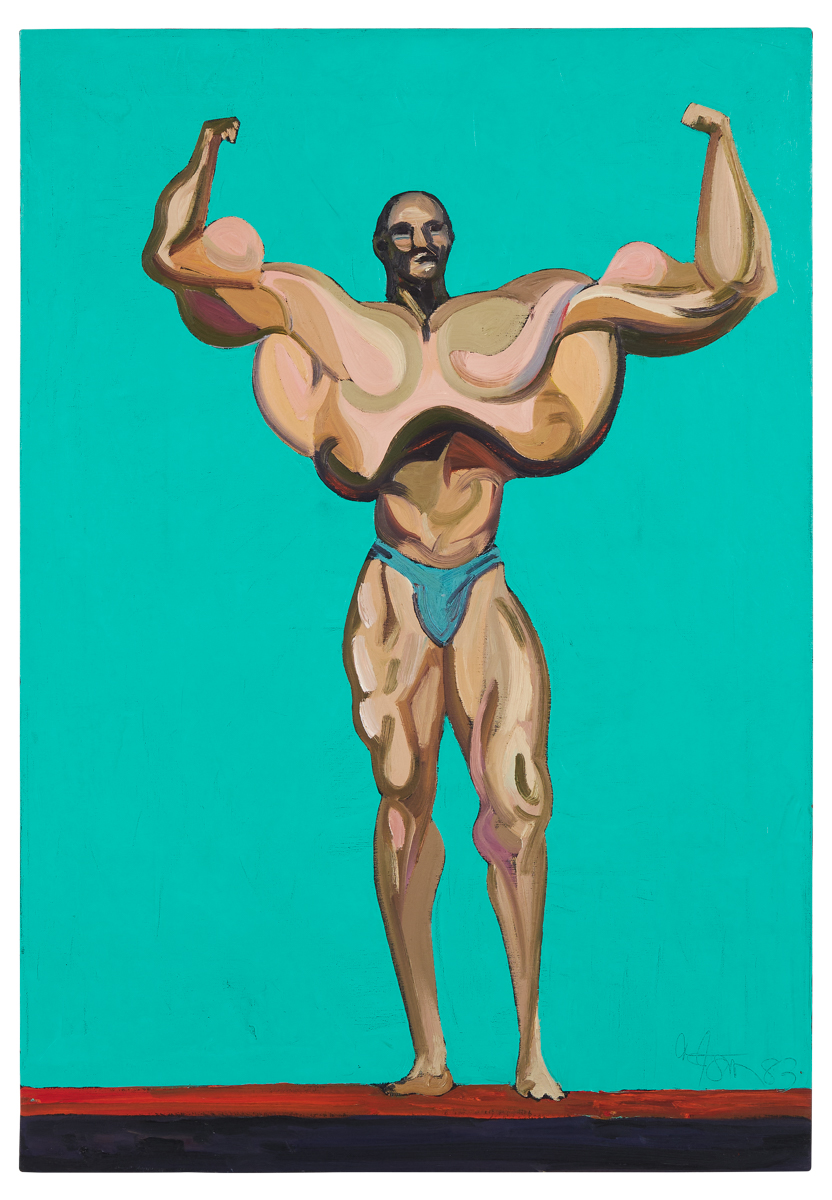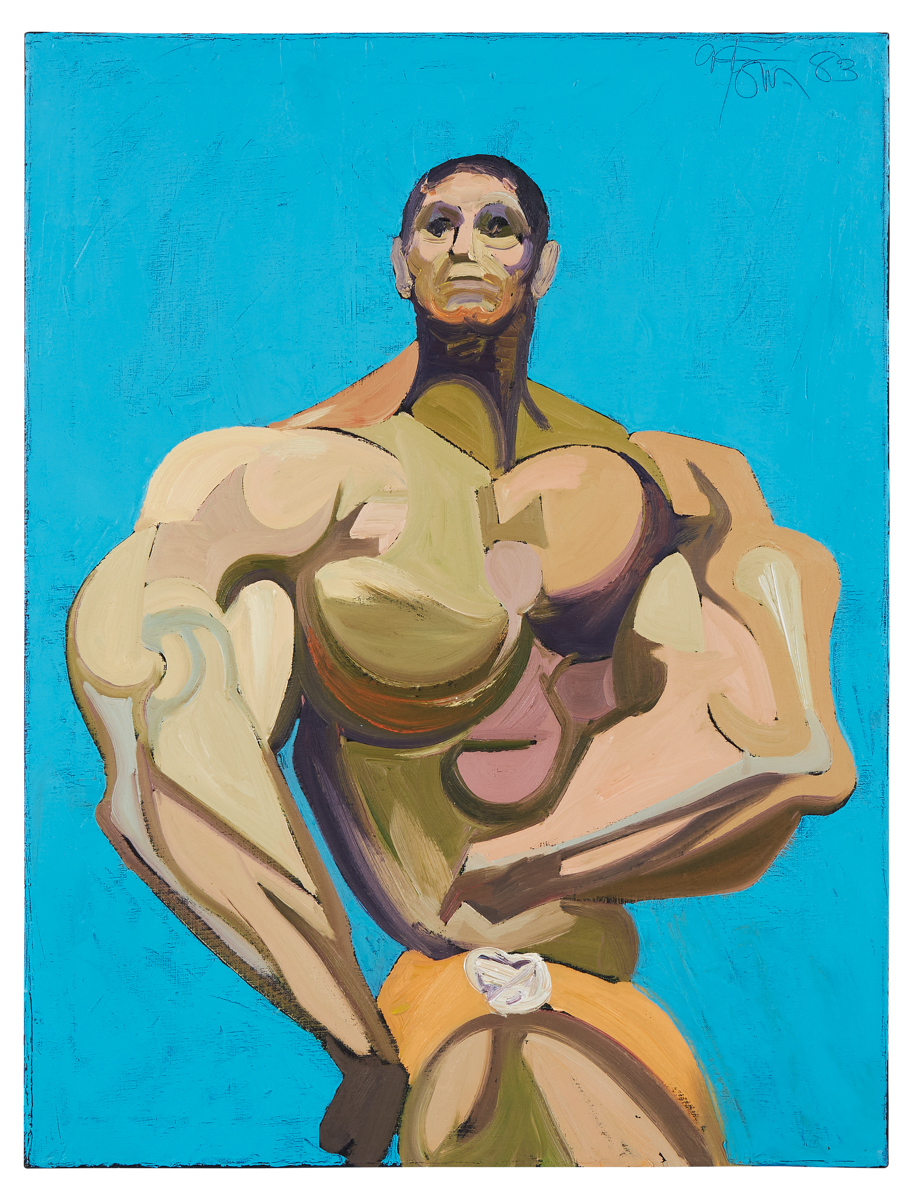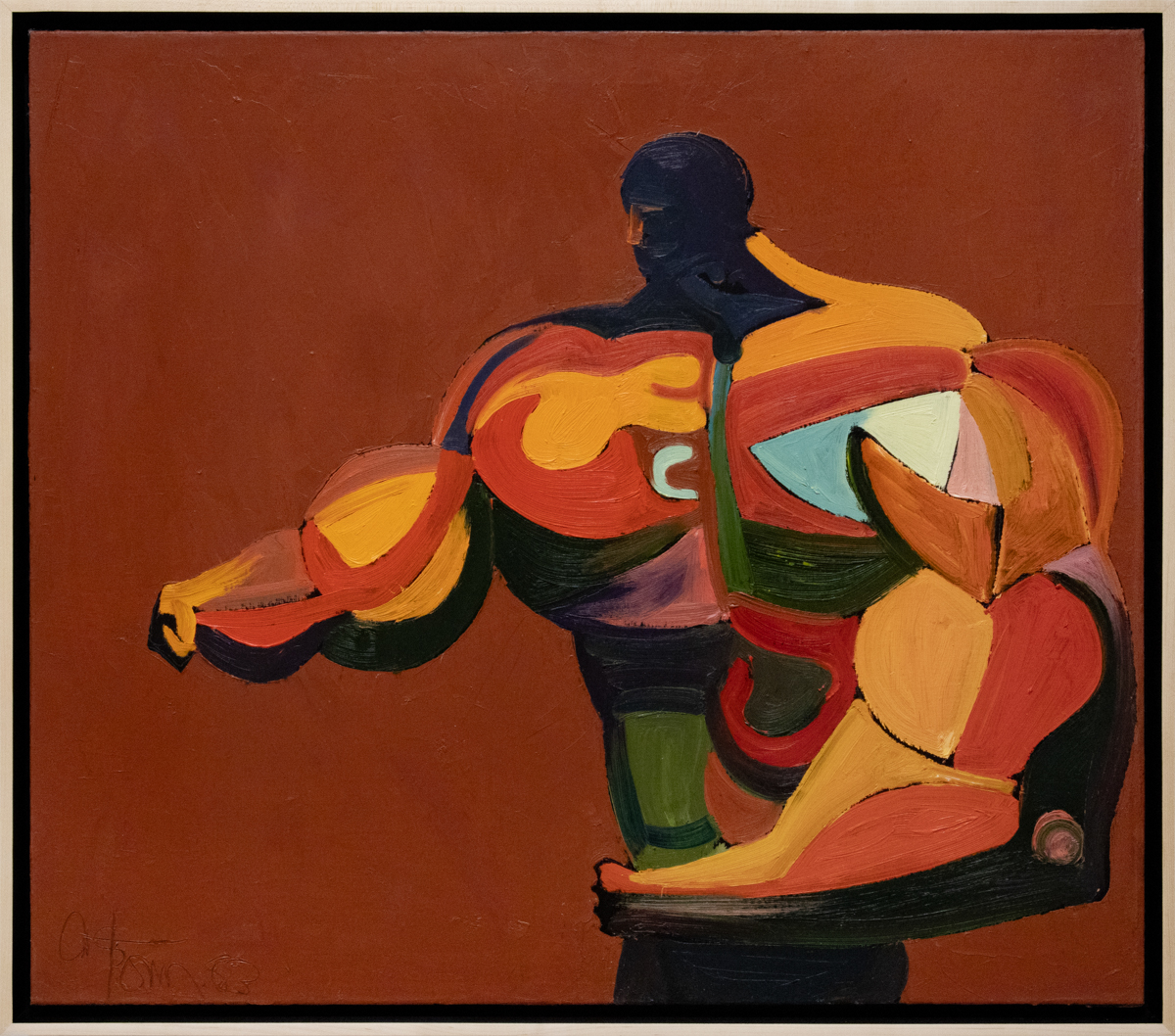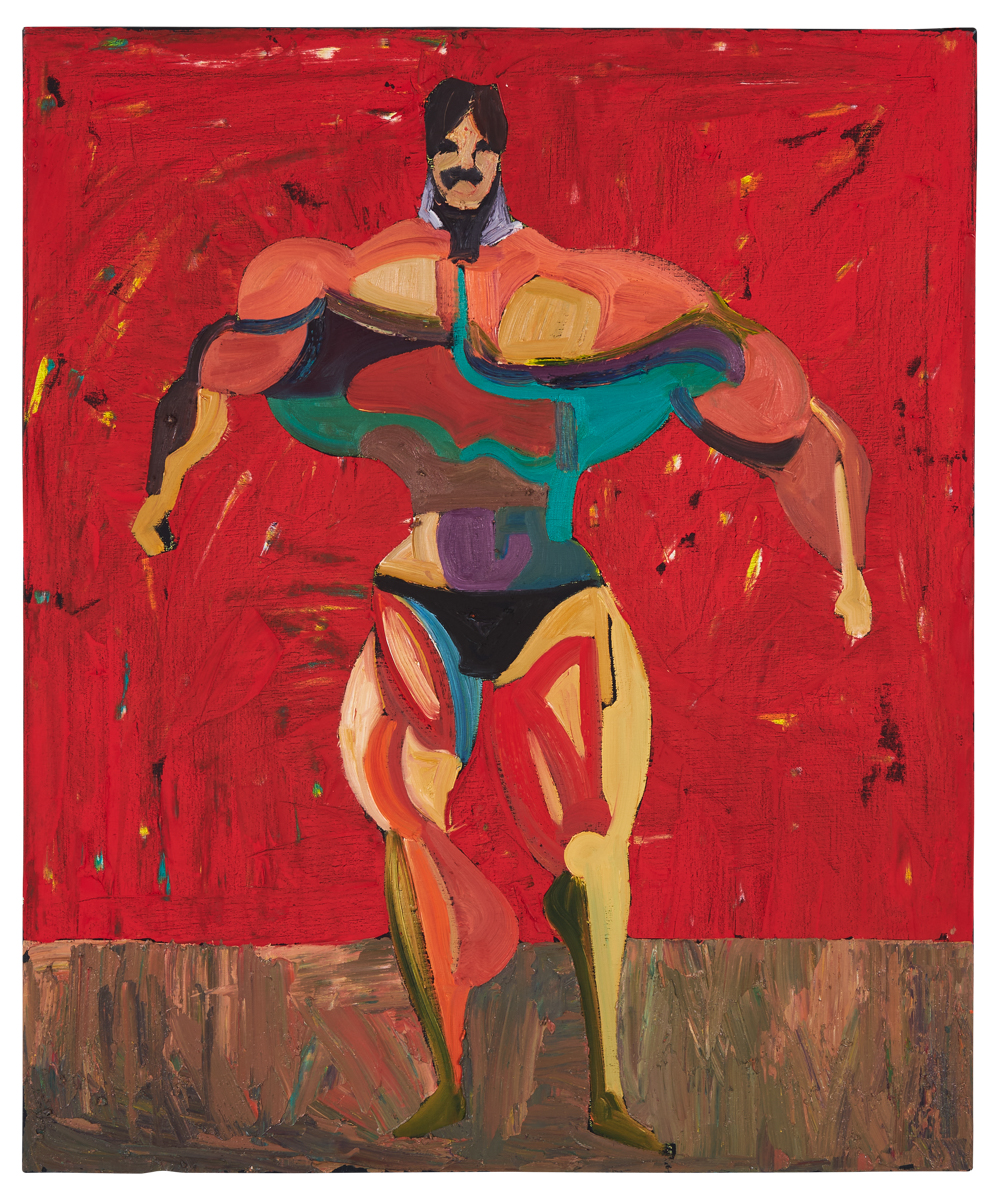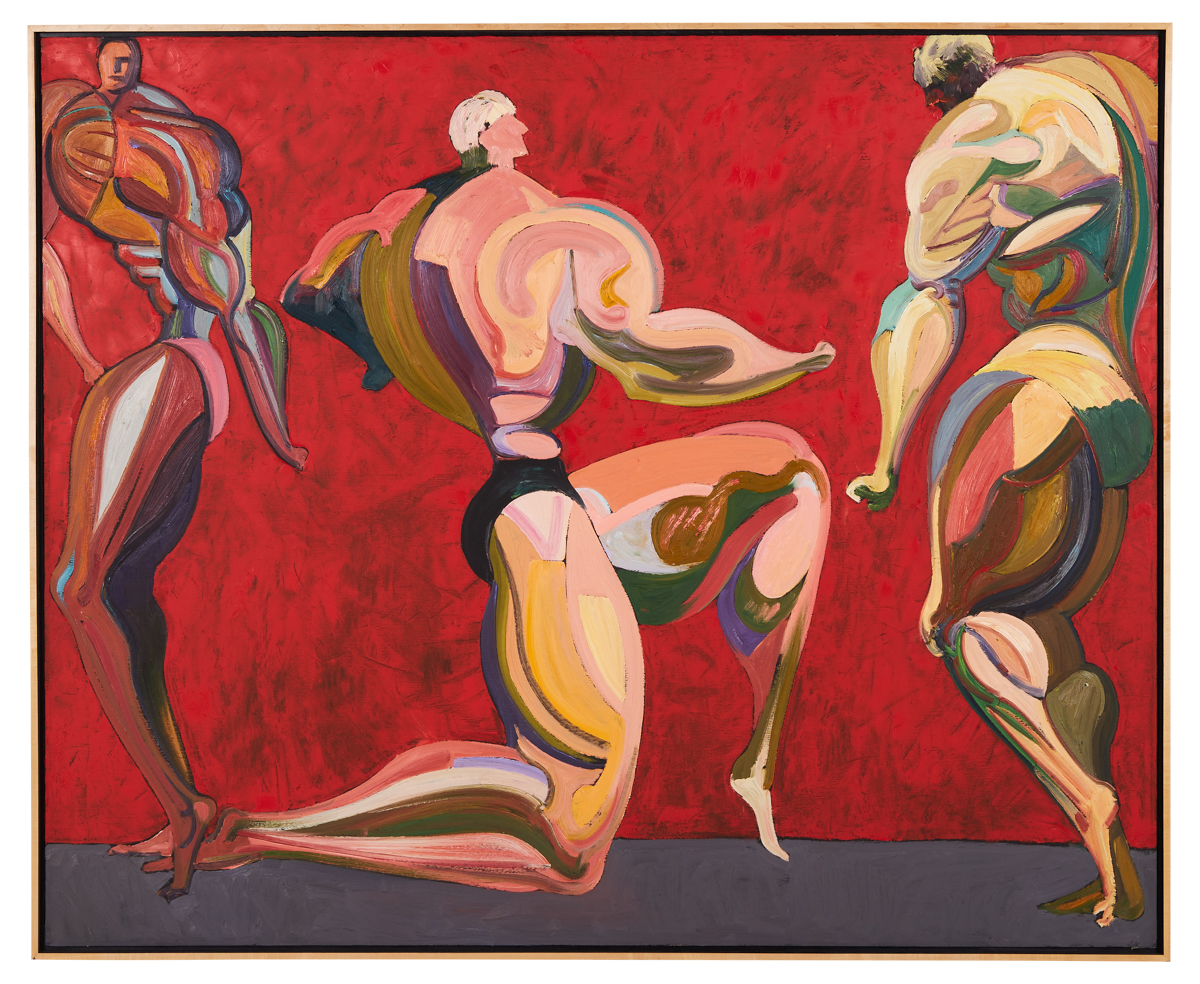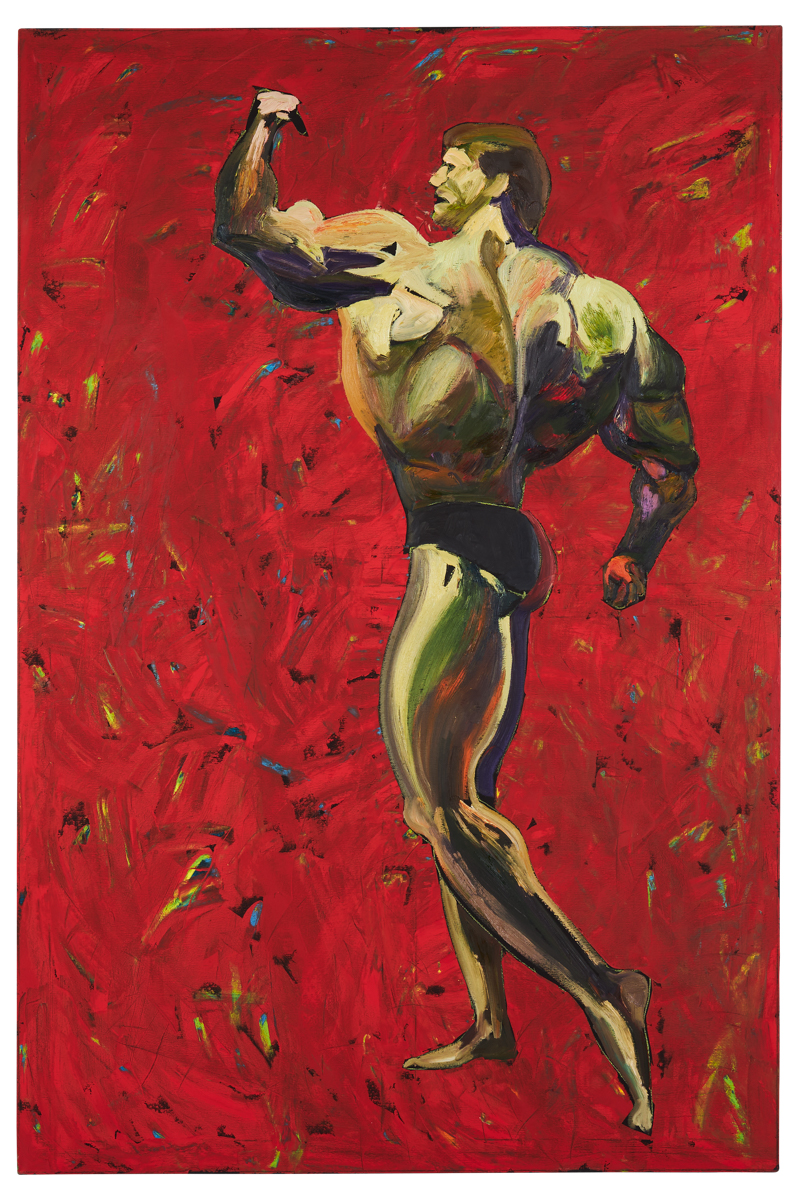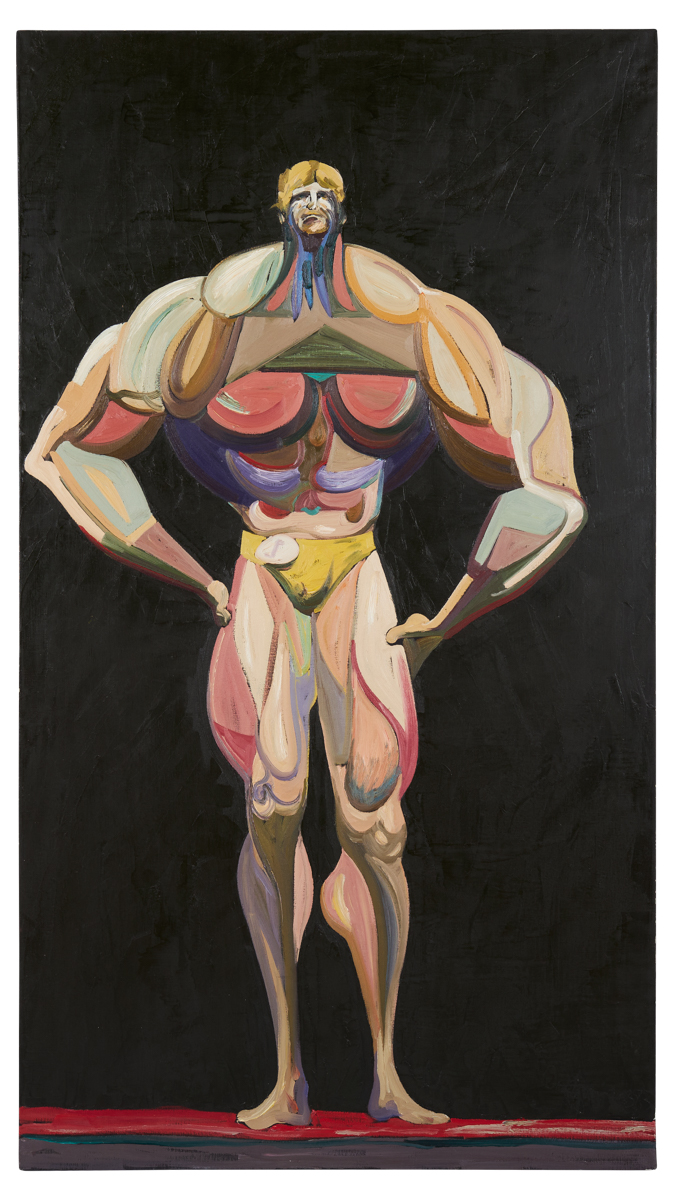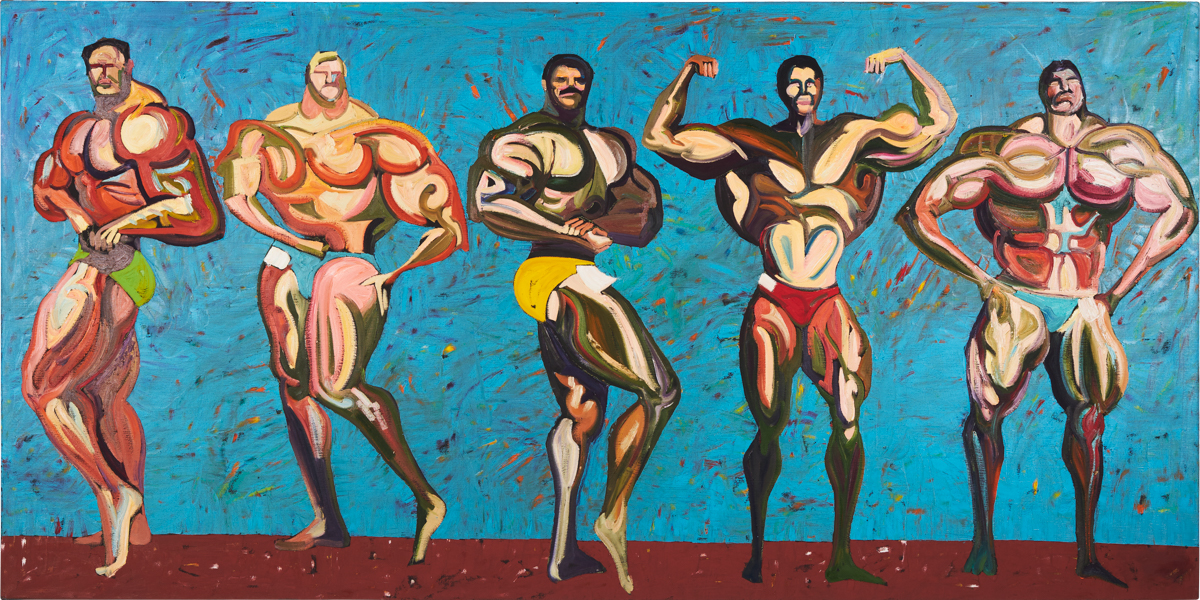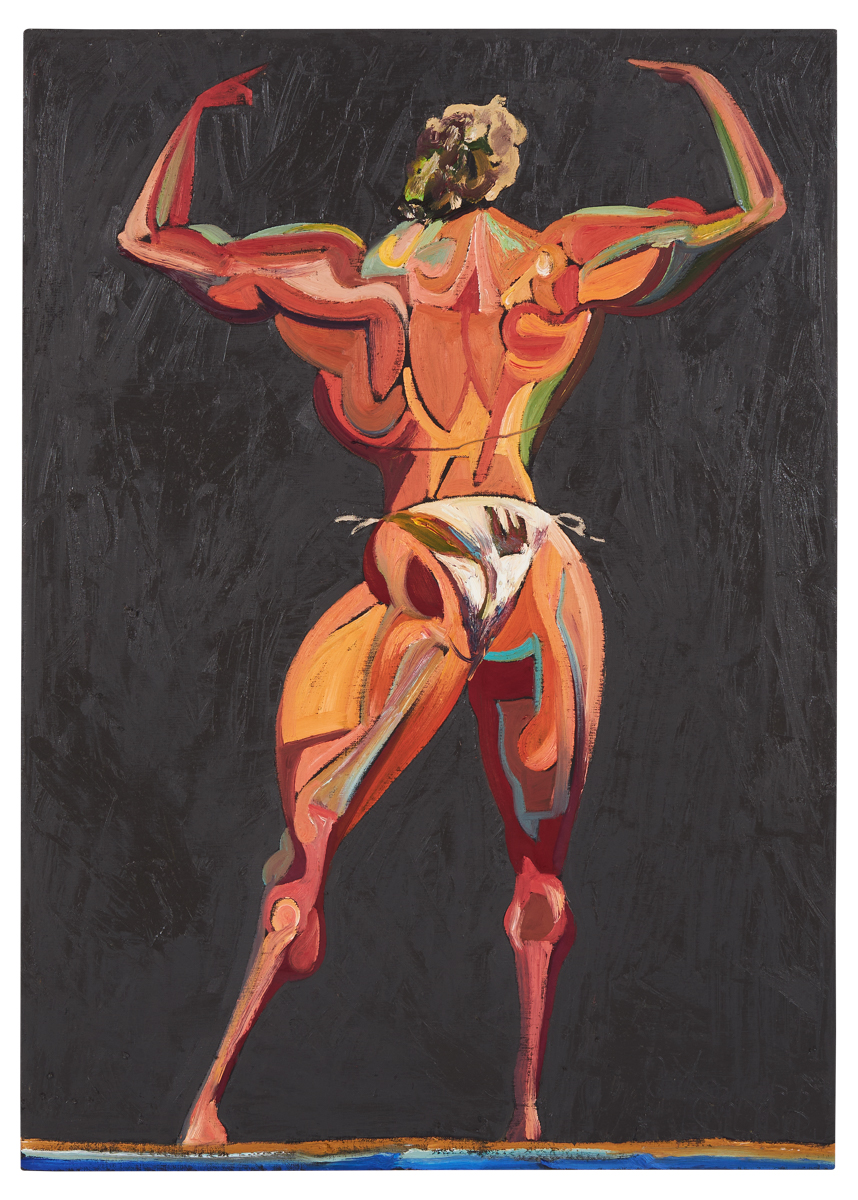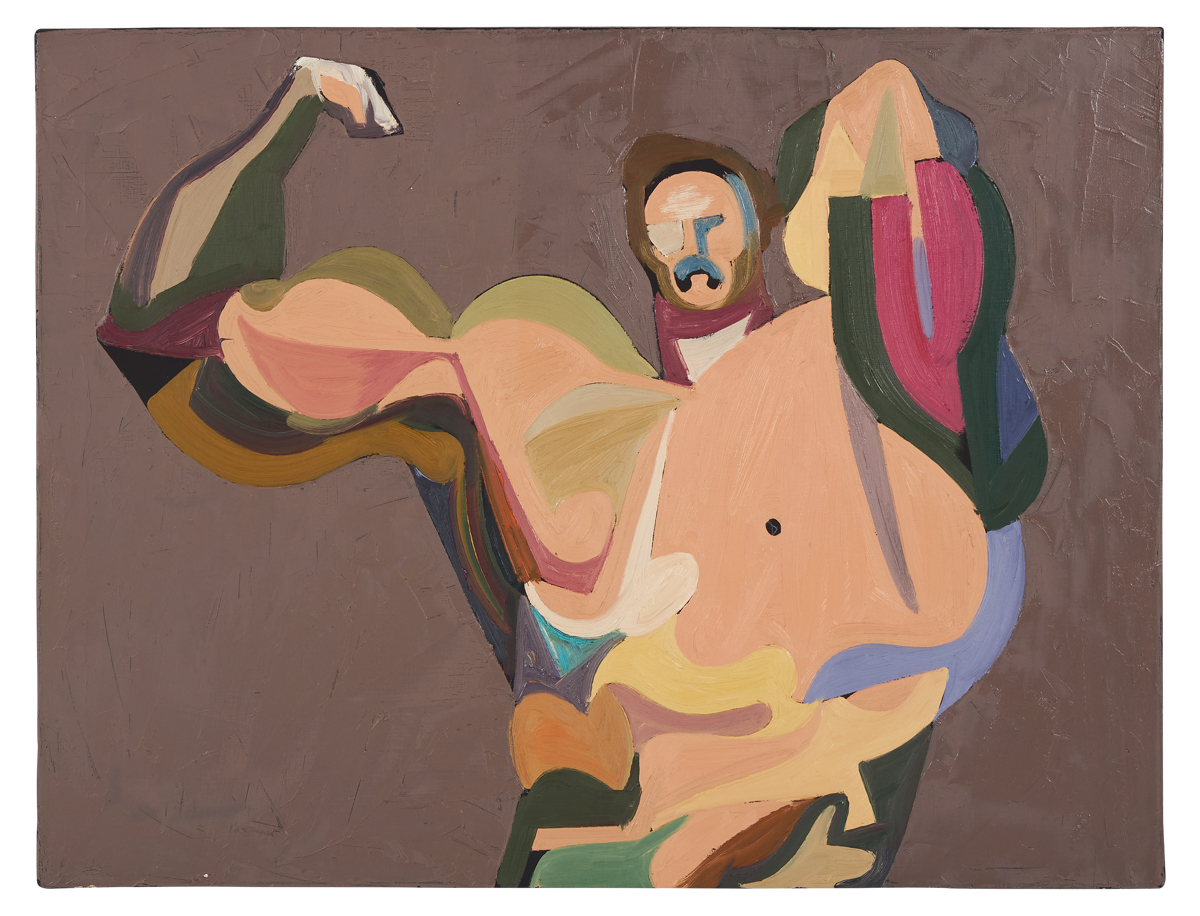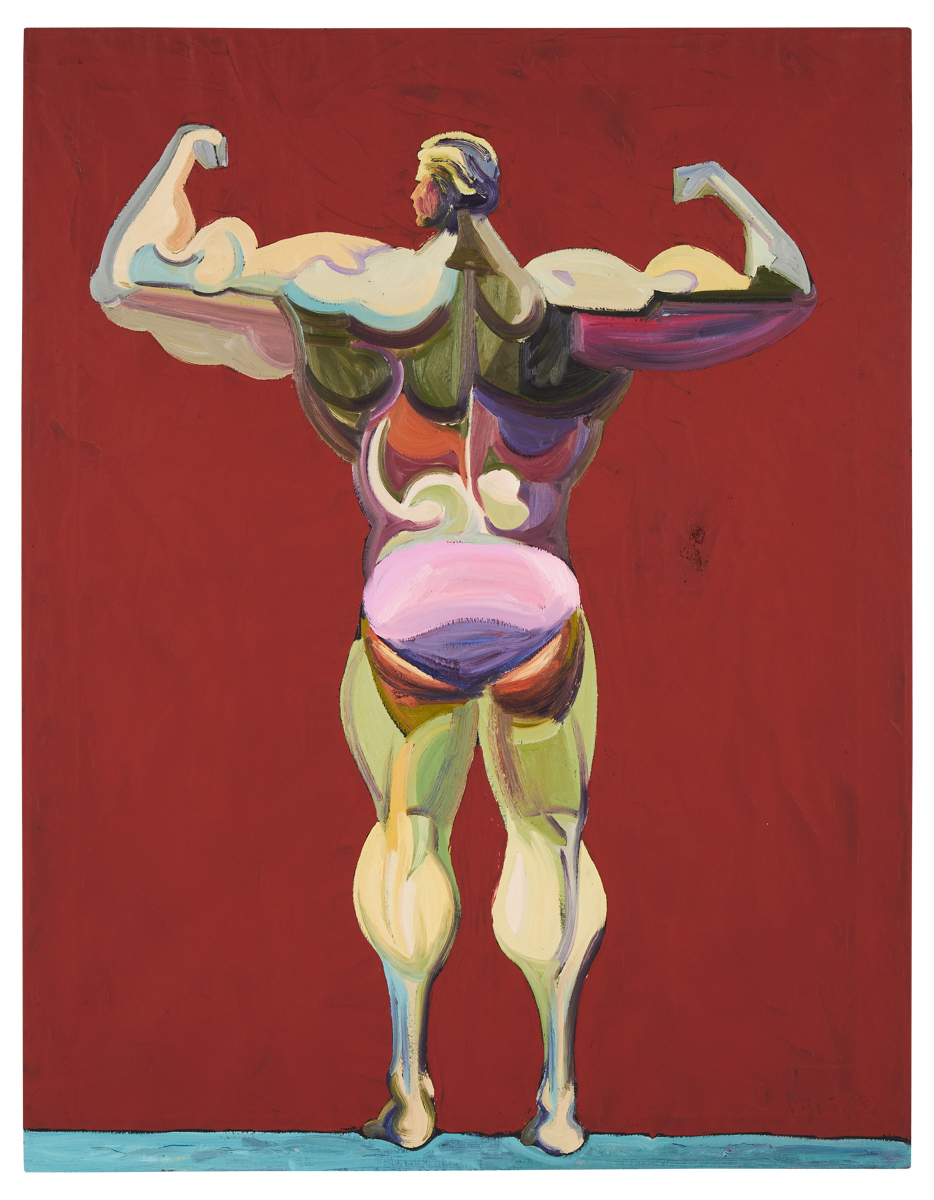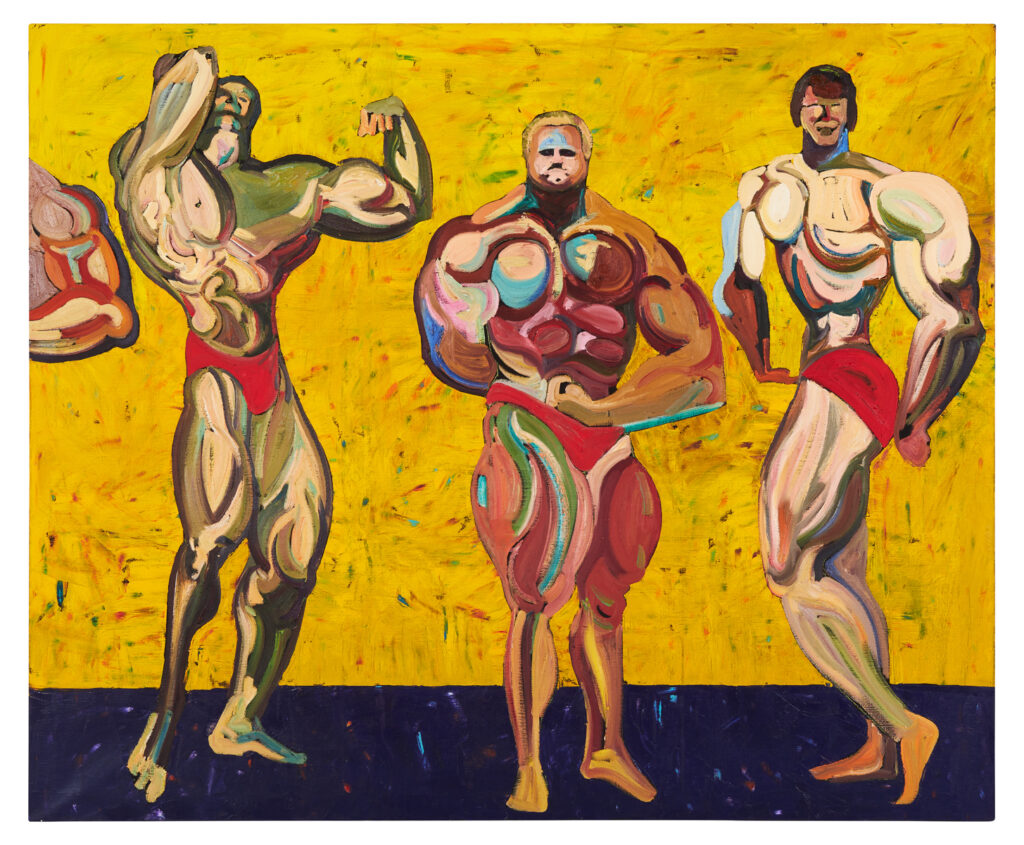

A never-before-seen collection of artworks from the 1980s, the Muscle paintings were ahead of their time. They place a focus on the body that feels even more relevant today, in the era of Instagram.
The paintings depict the striking glory of bodybuilders’ forms without shying away from the grotesque. Town captures the energy of their poses with strong colours and bold applications of paint, defining their musculature with confident strokes.
When they were created, the Muscle paintings were rejected by the art establishment. They were considered trivial – perhaps because they were bold and colourful when the critically acclaimed aesthetic of the day was sparser and conceptually driven. Perhaps it was related to homophobia at a time when the AIDS crisis was at its peak. But Town believed in the paintings, as evidenced by his insistence that they be included in his 1986 retrospective at Toronto’s Art Gallery of Ontario.
“That was the creative genius of Harold Town,” says gallery owner Christopher Cutts, “He was a rebel, and he wouldn’t give the critics what they wanted.” As Town himself said in the late 1970s, “It’s time for me to become unpopular again.” In retrospect, his return to figuration coincided with the rise of Neo-expressionism and captured the zeitgeist of the 1980s.
According to Shelley Town, one of her father’s inspirations for the Muscle paintings would have been Pumping Iron, the 1977 bodybuilding documentary that introduced Arnold Schwarzenegger to popular culture. Town appreciated the film’s portrayal of the human physique as an art form, with athletes literally sculpting their bodies.
“He became fascinated with bodybuilding and started collecting 1970s muscle magazines, which became his main source material for these works.”
Town admirers have long predicted these vibrant paintings would have their day, and finally, their time has come. This is the first time the Muscle series will be on display as a full collection.
Toronto-born Harold Town first rose to fame in the 1950s as a central figure in Painters Eleven, a collective that launched abstract expressionism in Canada. His work was shown twice at the Venice Biennale and collected by major international museums. Town stirred up controversy as a writer, raconteur and media personality until his death in 1990.